
Last updated November 24, 2026
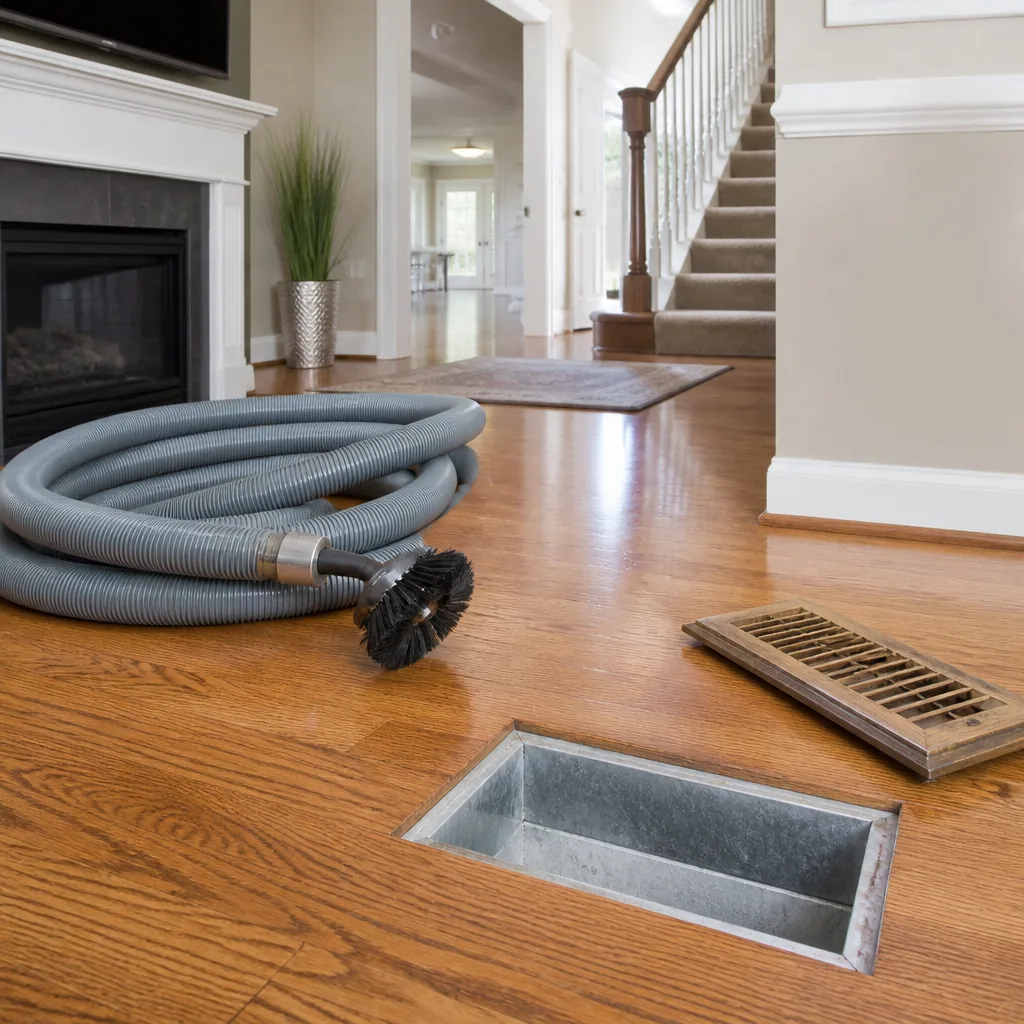 Whole-home duct cleaning
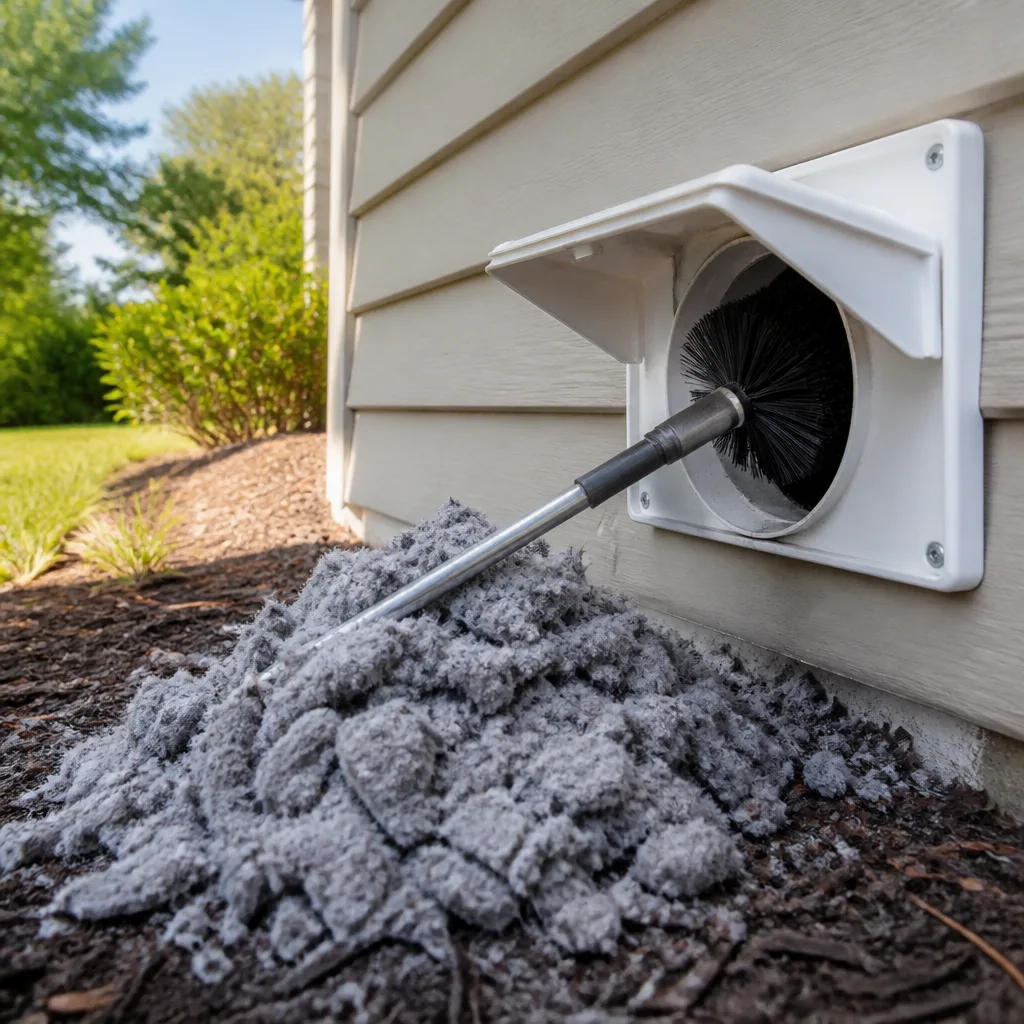 Dryer vent cleaning
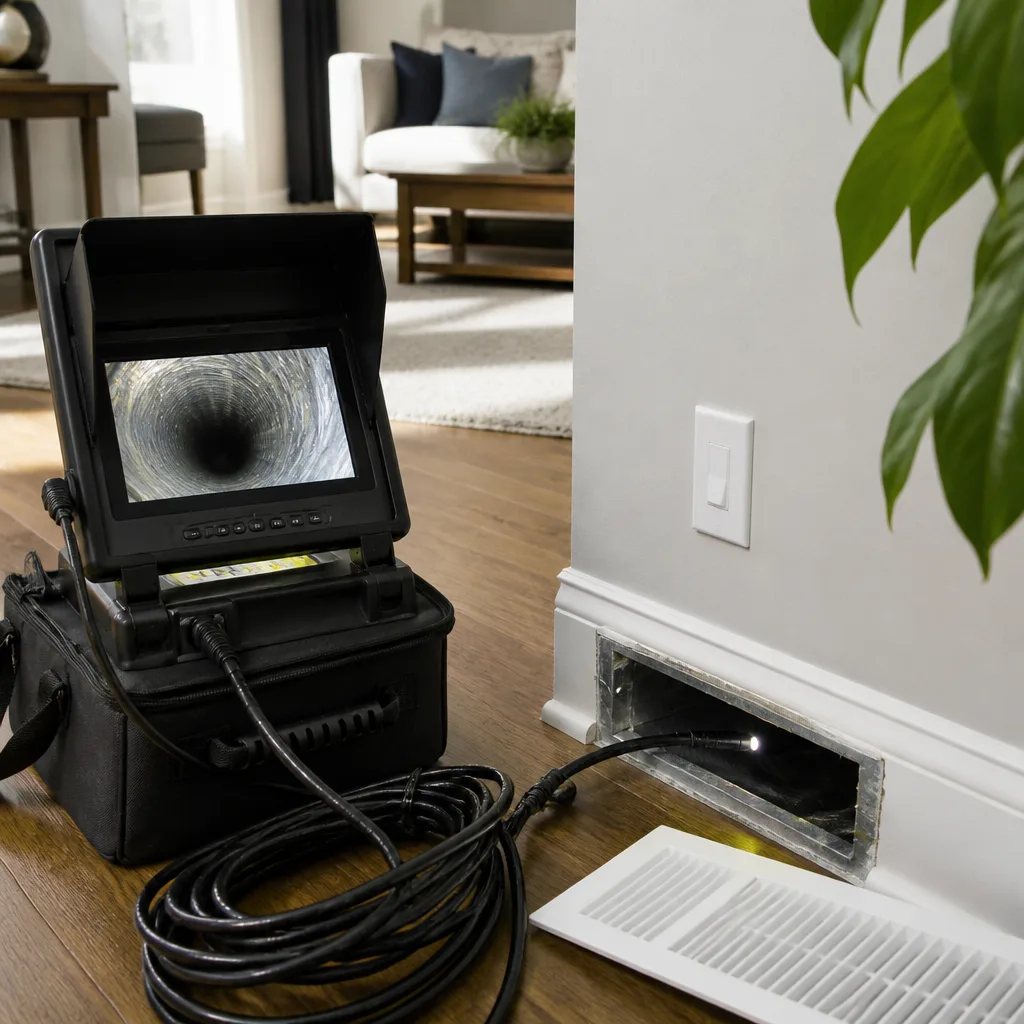 Camera inspection
 Sanitizing & deodorizing
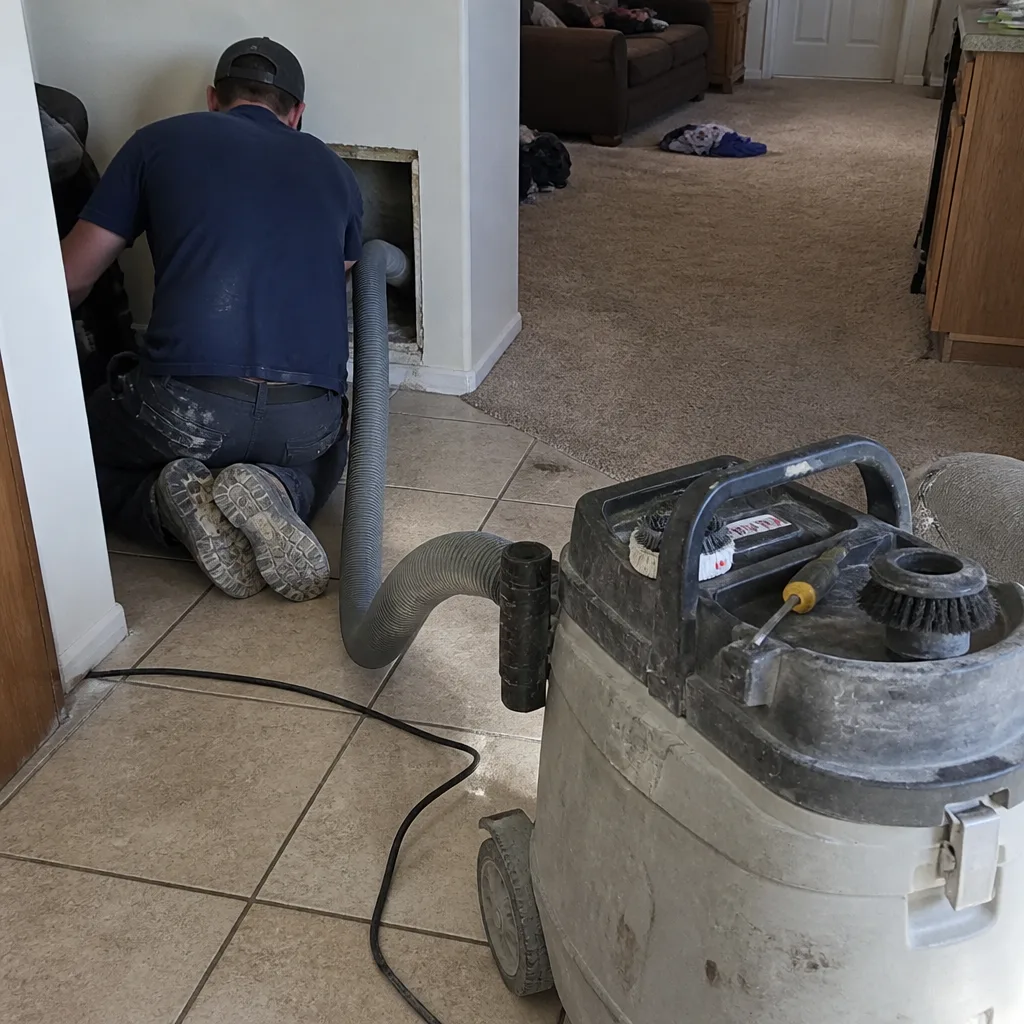
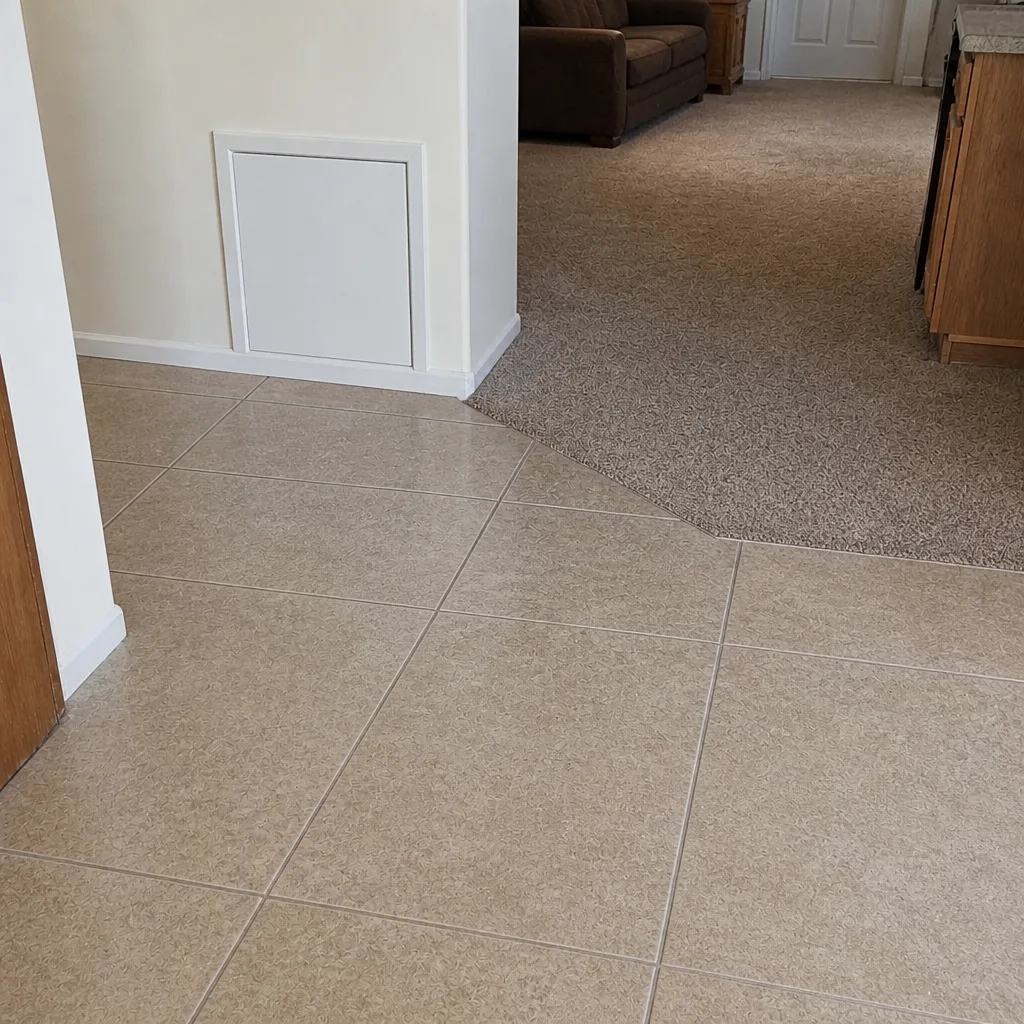
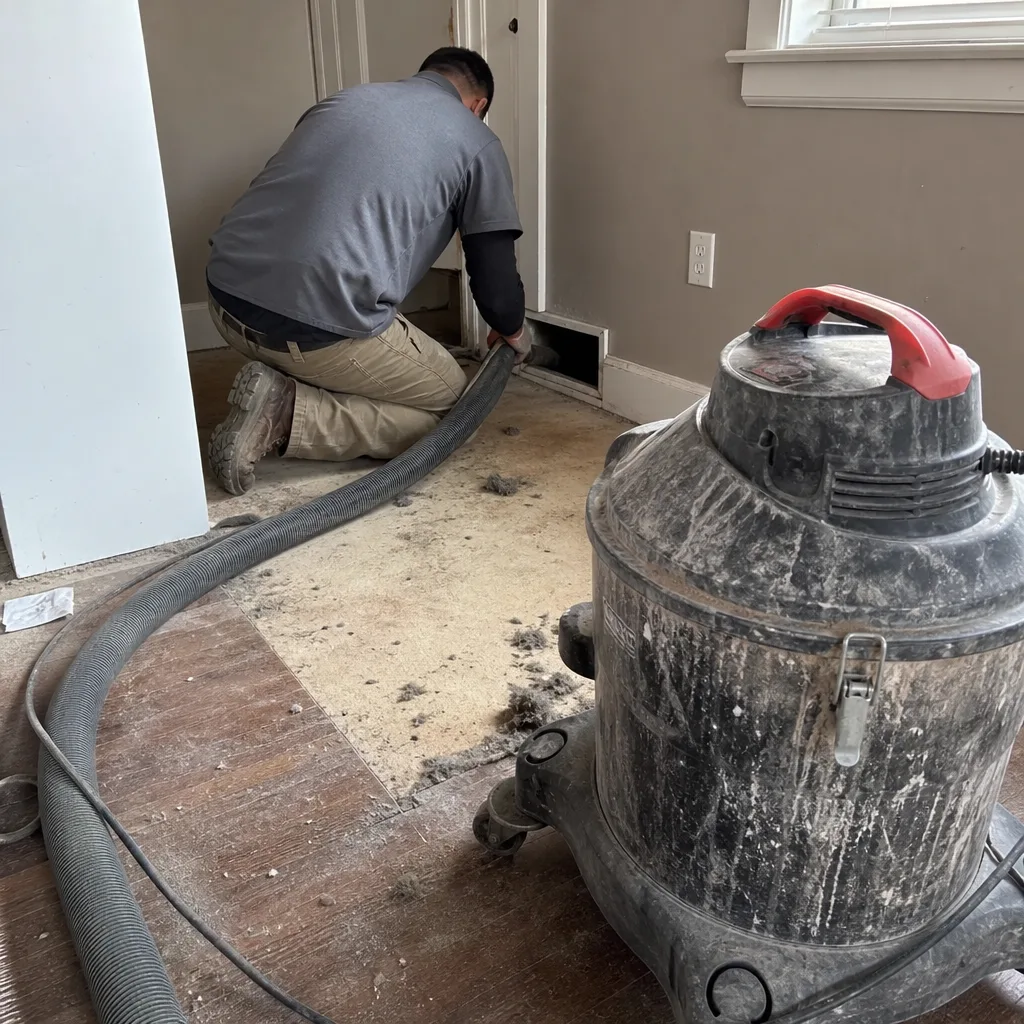
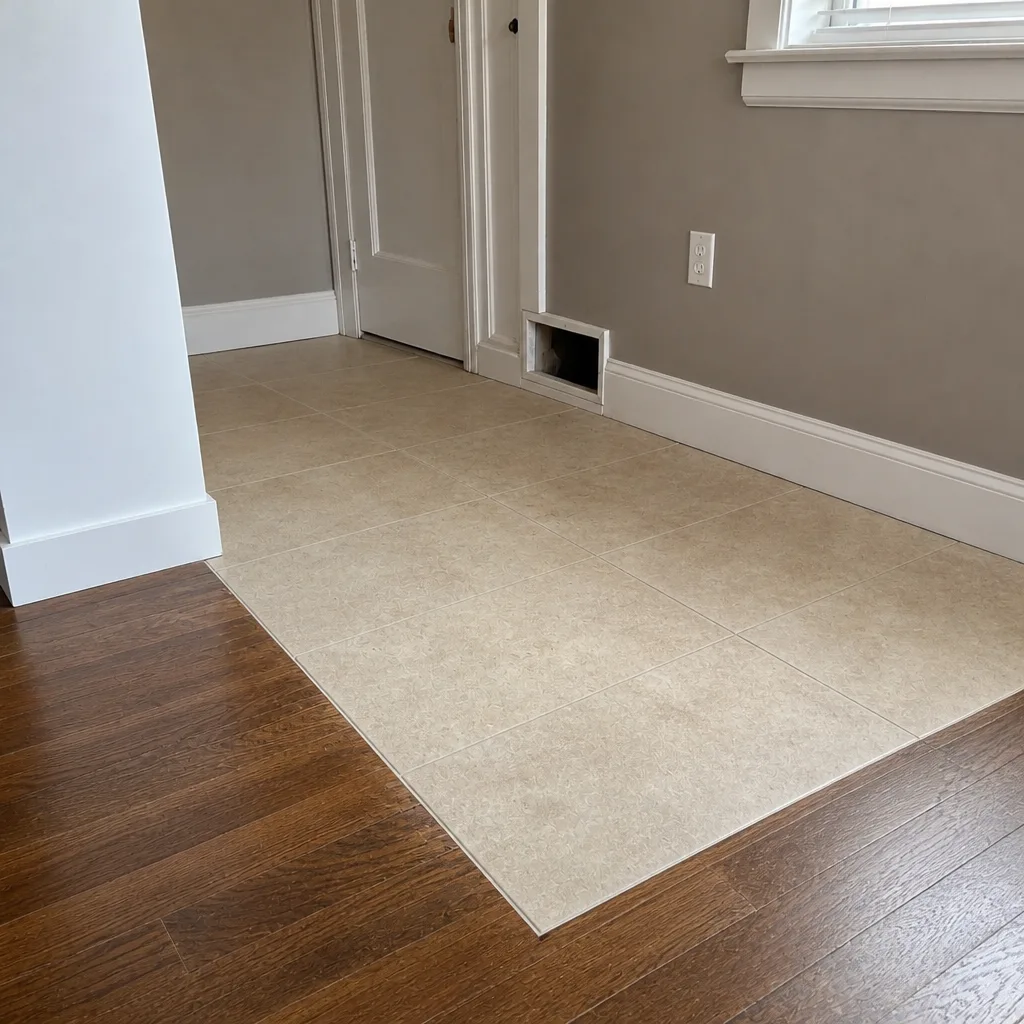
Whole-system duct and dryer vent check with before-and-after photos - you see exactly what came out of your vents
That "$99 whole-house special" is a bait ad - the real number appears once they are in your hallway, or the "clean" is a shop-vac at the register. We photograph the inside of your ducts before and after instead.
Air Duct Cleaning Warning Signs: A Murray Homeowner’s Reference Guide
If one room in your house consistently runs 5 to 8 degrees warmer than the rest and your HVAC is otherwise functional, the problem is almost certainly in the ductwork. Not the thermostat. Not the vents. Not a failing HVAC unit. That single fact trips up more Murray homeowners than any other, because a room that won’t heat or cool looks like a mechanical failure when it’s usually a distribution problem. Duct problems tend to give you visible and measurable signals weeks or months before they touch your health or your energy bill. The trouble is most people don’t know what they’re looking at, so they dismiss the clues or blame something else. This guide walks through what those signals are, how to test for them yourself, and when to stop investigating and call in Murray Air Duct Cleaning Pros.
Styles & brands we work with
- Whole-home duct cleaning
- Dryer vent cleaning
- Camera inspection
- Sanitizing & deodorizing
Quick Answer
The main warning signs of dirty or damaged ductwork are uneven room temperatures, dust that returns within a day or two of cleaning, visible mold at supply registers, musty or animal odors, and worsening allergy symptoms. The two most reliable signals for Murray homeowners are a consistent 5 to 8 degree temperature gap between rooms and dust that reappears fast after you clean, because both point to air leakage or restricted runs rather than ordinary dust.
Table of Contents
- Sign 1: The Temperature Gap Between Rooms
- Sign 2: Whistling, Thumping, and Airflow You Can Hear
- Sign 3: Dust That Comes Back Within 24 to 48 Hours
- Sign 4: Mold at Supply vs. Return Registers
- Sign 5: Reading Odors Correctly
- Sign 6: Allergy Symptoms as the Late Signal
- Sign 7: Energy Bills That Climb Without Explanation
- The Infrared Thermometer Test
- Common Mistakes to Avoid
- When to Call a Professional
- Frequently Asked Questions
Sign 1: The Temperature Gap Between Rooms
A house with a sound duct system keeps its rooms within a couple of degrees of each other. When one bedroom, a bonus room over the garage, or a far-end kitchen sits 5 to 8 degrees off from the rest of the house, the system is moving air unevenly. In Murray, that gap often shows up first in upstairs rooms during summer months, when warm attic air amplifies whatever the ducts are already losing.
That unevenness usually has one of three causes, and none of them are the thermostat:
- Disconnected or crushed duct runs. A joint that slipped apart in the attic sends conditioned air into the attic instead of the room.
- Duct leakage. Small gaps along a long run bleed off pressure before the air reaches the far register.
- Restricted airflow. A run that’s undersized, kinked, or partly blocked by debris can’t deliver its share of air, no matter how hard the furnace or air handler pushes.
Here’s the part most homeowners miss: the room that runs warm all summer often runs cold in winter, or the reverse. That pattern is a distribution problem, not a temperature problem. A HVAC unit that struggles in one spot is usually doing its job fine everywhere else.
Sign 2: Whistling, Thumping, and Airflow You Can Hear
Your duct system should be quiet. When you can hear it working, air is forcing its way through a restriction or vibrating a loose component. Those sounds are diagnostic, and each one points to a different problem.
- Whistling at a register means the vent is being starved. The run behind it is restricted, undersized, or leaking enough pressure that air rushes through a narrow opening.
- Thumping or popping when the system starts and stops points to ductwork moving as pressure changes, which usually means either undersized return air or flex duct that was installed loose.
- Rattling can come from loose duct connections, a disconnected run resting on a joist, or debris moving inside the duct.
- Hissing along a straight run is a strong signal of a leak at a joint or seam.
None of these sounds are normal, and none of them fix themselves. Air leakage compounds: a small gap lets out more air as the fan works harder. If you can hear air escaping in the basement, the attic, or a crawl space, that’s your system paying for air that never reaches a room.
Sign 3: Dust That Comes Back Within 24 to 48 Hours
Every house collects dust. That’s not a warning sign. What matters is timing. If you dust a surface or clean a ceiling fan and the same layer of dust returns within 24 to 48 hours, the dust isn’t settling from the room. It’s being delivered by the system. That difference separates a dirty-duct problem from a dust-leakage problem, and it means cleaning the ducts alone won’t hold.
Here’s why the distinction matters. A system that’s dirty and tight will shed dust until it’s cleaned. A system that’s dirty and leaking will shed dust until it’s cleaned and sealed, because the leakage keeps pulling air from unconditioned spaces like the attic or crawl space. That air carries insulation fibers, soil, and whatever else has collected there. It gets pushed through the supply ducts and deposited on your furniture within a day.
Where the dust lands matters too. A fine gray film on horizontal surfaces near supply vents points to supply-side delivery. Dust concentrated on the walls near return vents suggests the return is pulling from a dirty space or that filtration is undersized. We inspect both sides before recommending a scope of work, because in our experience a warning sign that comes back fast is usually asking for air duct cleaning plus a look at where the system is losing pressure.
Dust that looks heavier or darker in one room specifically can also mean that run is disconnected from the rest, pulling attic or crawl space air directly into the room. Look up at the register in that room. If the vent grille is dusty on the inside surface, the dust is coming through, not settling.
Sign 4: Mold at Supply vs. Return Registers
Which register the mold is on tells you what’s happening, and this is one of the most useful diagnostics a homeowner can read. Here’s how to think about it.
Mold at a supply register means the contamination is downstream of the coil. The air handler sends cooled, humidified air into an insulated duct that may be sitting in a hot attic. If the insulation is compromised or the duct is running through an unconditioned space, that air condenses on the duct wall. Wet insulation is a mold nursery. The mold then grows and gets delivered into the room. In Murray’s dry climate, this is easy to dismiss, but summer humidity plus an attic that hits 130 degrees is a recipe for condensation problems even in a desert state.
Mold at a return register means the contamination is upstream, which raises a bigger question about the air handler itself. Return air passes near the coil, the drain pan, and any ducting that runs through a moisture-prone space. If growth is showing up there, the coil or drain pan may need attention, not just the ducts.
When we find mold, we don’t just clean it. We look at the moisture source. That’s where contaminant-control products like Abatement Technologies and Guardsman come into play, and where the diagnostic capability matters more than the cleaning itself.
Sign 5: Reading Odors Correctly
Odors are the most underused signal because most homeowners lump them all together. They don’t all mean the same thing, and the correct response differs.
| Odor | Likely Cause | What It Demands |
|---|---|---|
| Musty, damp, or like a basement | Mold or mildew growth, usually on wet insulation, a coil, or a drain pan | Find and fix the moisture source, then sanitize the affected components |
| Burning, hot, or metallic | Debris on or near the heat exchanger, or an overheating component | Shut the system down and have it inspected by an HVAC professional before running it again |
| Animal or urine-like | Rodent or animal activity inside the ductwork | Clean and decontaminate the entire affected run, then find the entry point |
The burning smell is the one to take seriously. That’s not a dirty-duct problem, and it’s not something to run until it clears. Shut the system off and call an HVAC technician.
The animal smell is more common than people realize in Murray, especially in homes near open space or with attics that have easy access points. Rodents find their way into flex duct, chew through the jacket, and use it as a run. The telltale sign is the smell, often followed by a spike in allergy symptoms and the appearance of droppings in the attic. If you smell it, don’t just mask it with an air freshener.
Musty odor is the most ambiguous. It could be a small mold problem or a large one. Either way, it won’t clear with cleaning alone if the moisture source is still there, which is why we treat the source before we treat the air.
Sign 6: Allergy Symptoms as the Late Signal
This one is frustrating because by the time you feel it, the exposure has been going on for a while. Increased allergy symptoms as an indicator of dirty ductwork are a lag signal, not an early one. The ducts have typically been accumulating contaminants for weeks or months before anyone notices a runny nose, a cough, or the feeling of waking up congested in a house that used to feel fine.
Why are they late? Because low-level exposure to dust, mold spores, and particulates doesn’t produce an immediate reaction in most people. It’s a gradual shift. You adjust to a slightly worse baseline without noticing, and then a season change or a stretch of closed windows pushes you past the tipping point. If someone in the house is suddenly reacting more to indoor air while nothing else has changed, that’s worth taking seriously, especially in a Murray household where winter inversions keep people inside and windows closed for long stretches.
We’re not doctors, and we don’t diagnose. What we can tell you is that visible mold, rodent contamination, and dusty ductwork are all things a professional inspection can confirm. Where we can help is in cleaning the whole system, not just the ducts. Springing for a full-system HVAC cleaning and pairing it with upgraded filtration (Aprilaire and Honeywell systems handle this better than the standard 1-inch filter that most home builders installed) makes the biggest difference for someone reacting to their own house.
Sign 7: Energy Bills That Climb Without Explanation
A dirty or leaking duct system makes the HVAC unit work harder. Restricted airflow forces the blower to overcome more resistance, and leakage sends conditioned air into places that don’t need it. Both show up as higher energy bills before any of the more obvious symptoms appear.
What you’re looking for isn’t a small seasonal bump. It’s a pattern. If your summer cooling bills have been climbing year after year while your usage habits are unchanged and no one has added a new appliance, ductwork is a reasonable suspect along with insulation and the HVAC unit itself. A weak system has to run longer to hit the same indoor temperature, and in Murray’s high-desert summer, running longer is a real cost.
Uneven room temperatures and high bills tend to show up together for exactly this reason, and the fix for both is often the same: seal the leaks, clean what’s there, and give the system proper filtration. On the occasions when we find duct damage (crushed runs, disconnected joints, open seams), that’s where Murray Air Duct Cleaning Pros can repair and seal the system rather than just clean it.
The Infrared Thermometer Test
You can confirm the temperature gap yourself in about 15 minutes with a basic infrared thermometer, the kind that costs around $12 at any hardware store. Here’s how to run the test.
- Let the HVAC run at least 20 minutes. The system needs to reach steady state, not spin up from a cold start.
- Take a reading at the strongest register in the house, usually in a central room or a hallway near the thermostat. Point the thermometer at the grille, about a foot away, and note the number.
- Take readings at three other registers in rooms with reported issues: a bedroom, a far-end kitchen, a bonus room over the garage.
- Compare the numbers. If all reads are within a couple of degrees, your system is delivering air fairly evenly. If one or more rooms read 5 to 8 degrees off the strongest register, that run is restricted, leaking, or disconnected.
- Look at the trend, not one reading. Do this on a hot afternoon. Repeat it on a cold morning. A room that’s consistently colder or warmer than the rest points to a distribution problem.
You don’t need a professional to run this test, and the information is worth having when you call one. “My north bedroom reads 8 degrees colder than the hallway” is a much more actionable starting point than “it’s not cooling right,” and it saves time on the inspection.
The limit of the thermometer test is that it can tell you which room has a problem, but not what the problem is. That requires eyes on the ductwork and a professional assessment of where the system is losing pressure or where a run has failed.
Common Mistakes to Avoid
- Blaming the thermostat or the HVAC unit first. When the whole house feels off, it often is the system. When just one room is off, it almost never is. Check the room pattern before you call an HVAC technician out for a problem that lives in the ducts.
- Judging airflow by how you feel standing at a vent. Hand-feel is unreliable. Two rooms can feel roughly similar while one is actually receiving 30 percent less air than it needs. The thermometer test is the honest measurement.
- Cleaning the ducts without addressing leakage. In our experience, a cleaning that doesn’t look for duct integrity problems will see dust back in the same rooms within weeks. If your ducts are dirty and leaking, clean and seal.
- Masking odors with air fresheners or candles. A musty smell isn’t a scent problem. Neither is a rodent smell. Neither is a hot metallic smell, and that last one is a safety concern. Find the source before you treat the air.
- Assuming Murray is too dry for mold in ducts. Mold needs a moisture source, not a humid climate. An air handler in a hot attic, wet insulation on a cooled duct, or a slow drip near a return can grow mold in a dry place.
- Skipping the dryer vent because it isn’t a duct. Your dryer vent is a duct, and lint buildup in it is a fire risk. It’s a separate job from the HVAC ducts, but it’s inspected and cleaned on the same visit when we can, and skipping it leaves one of the most important links in the system untouched.
- Ignoring the return side entirely. Most duct cleaning conversations focus on supply ducts, but a dirty return is often the cause of the smell and the reason the air handler is struggling. A whole-system approach has to include both sides.
When to Call a Professional
Some signs are worth watching. Others are worth calling on. Call a professional when a room is 5 to 8 degrees off the rest of the house and stays that way after other fixes, when dust returns to your surfaces within a day or two of cleaning, when you see mold at a register, when you smell musty or animal odors, or when someone in the house is reacting to the indoor air more than they used to. The burning smell is different: shut the system down and call an HVAC technician for that one. When the symptoms line up with dirty or leaking ductwork, cleaning the whole system is usually the right next step. Murray Air Duct Cleaning Pros offers free estimates in Murray: call (855) 658-3962, and we can walk through what you’ve noticed before we ever send someone out.
Frequently Asked Questions
The two most reliable signals are a consistent 5 to 8 degree temperature gap between rooms and dust that returns within 24 to 48 hours of cleaning. Both point to a system that’s either restricted or leaking, which is more informative than “the ducts look dirty.” Visible mold and musty odors are strong secondary signals. If you’re noticing either, call (855) 658-3962 to set up a free estimate.
Use an infrared thermometer to compare register temperatures around the house, and use the “dust return” test to see how quickly surfaces get dusty again after cleaning. Together those two signals tell you whether the problem is delivery (uneven temperatures) or leakage (fast dust return). Neither test requires a professional, though they don’t tell you where the leak or restriction is. Call (855) 658-3962 if you want a fuller inspection.
No. Every house collects dust. What matters is how quickly it comes back and where it lands. Dust that returns within 24 to 48 hours of cleaning is a system problem. Ordinary settling dust is not. We encourage homeowners to check where the dust concentrates before scheduling a cleaning, and if that check leaves you unsure, an inspection will confirm it faster than guessing. Call (855) 658-3962 to talk through what you’re seeing.
Mold at a supply register means contamination is downstream of the coil; it often points to wet insulation on the cooled duct side. Mold at a return register means contamination is upstream, which can implicate the air handler, coil, or drain pan. The location narrows down what to inspect. Either way, the moisture source needs to be found before cleaning means much. Reach out at (855) 658-3962 for a diagnostic.
They’re a lag indicator, not an early one. By the time allergy symptoms appear, the duct system has typically been accumulating contaminants for weeks or months. That doesn’t make the symptom less real, but it means waiting for symptoms to appear leaves you with prolonged exposure. The earlier signs (uneven temperatures, fast dust return, musty odor) give you weeks of lead time. Call (855) 658-3962 if you suspect the ducts are contributing.
Anything involving a burning or metallic smell is the most urgent, and it usually means an HVAC component needs attention, not a duct cleaning. Rodent contamination inside ducts is the second most urgent, because the contamination is active. Ordinary dust, mold, and uneven temperatures are important but not emergencies. If you’re not sure which category you’re in, call (855) 658-3962 and we can help you sort it out.
The Bottom Line
The thing that separates a duct problem from an HVAC problem is where the symptoms show up. A single room that won’t keep up points at the ducts. Dust that returns within a day points at leakage. Mold location tells you which side of the coil you’re dealing with. Odors narrow the cause. And allergy symptoms are late, which is why you want to catch the earlier signs first. Our approach at Murray Air Duct Cleaning Pros is built around reading the whole system: the ducts, the air handler, the vents, the filtration, and the sealing. That’s why we clean with professional-grade equipment like Rotobrush and Nikro (the same systems used in commercial and restoration work) and pair it with contaminant-control products like Guardsman and Abatement Technologies. Because a warning sign is only useful if the fix actually addresses what caused it.
If you’ve been noticing the signals in this guide and want a straightforward look at what your system is doing, call (855) 658-3962 for a free estimate. Our technicians have up to 11 years of experience reading exactly these symptoms in Murray homes, and we can tell you plainly whether cleaning, sealing, or a technician visit is the right next step. We answer 24/7. Fast dispatch from 7am to 7pm, Sunday through Friday.
Written by the team at Murray Air Duct Cleaning Pros.
See the difference
 Before
 After
 Before
 After
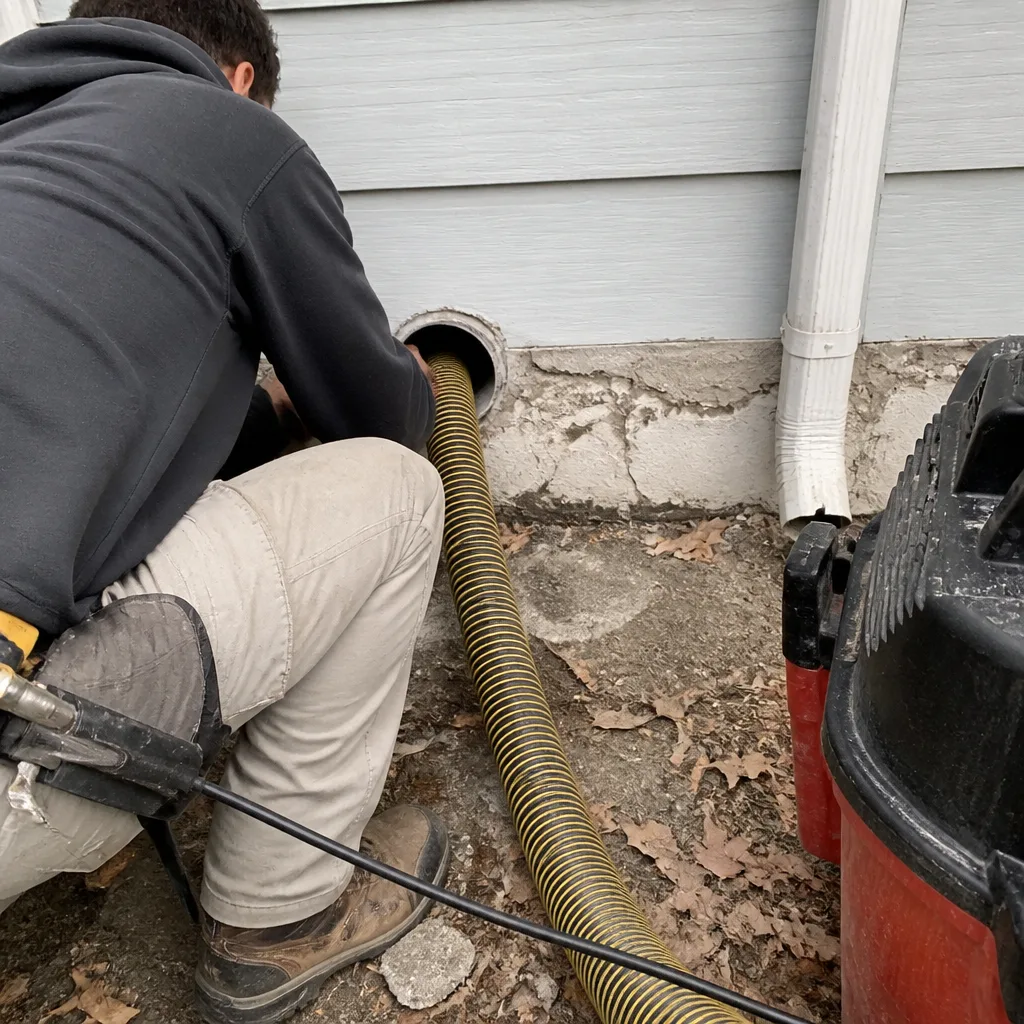 Before
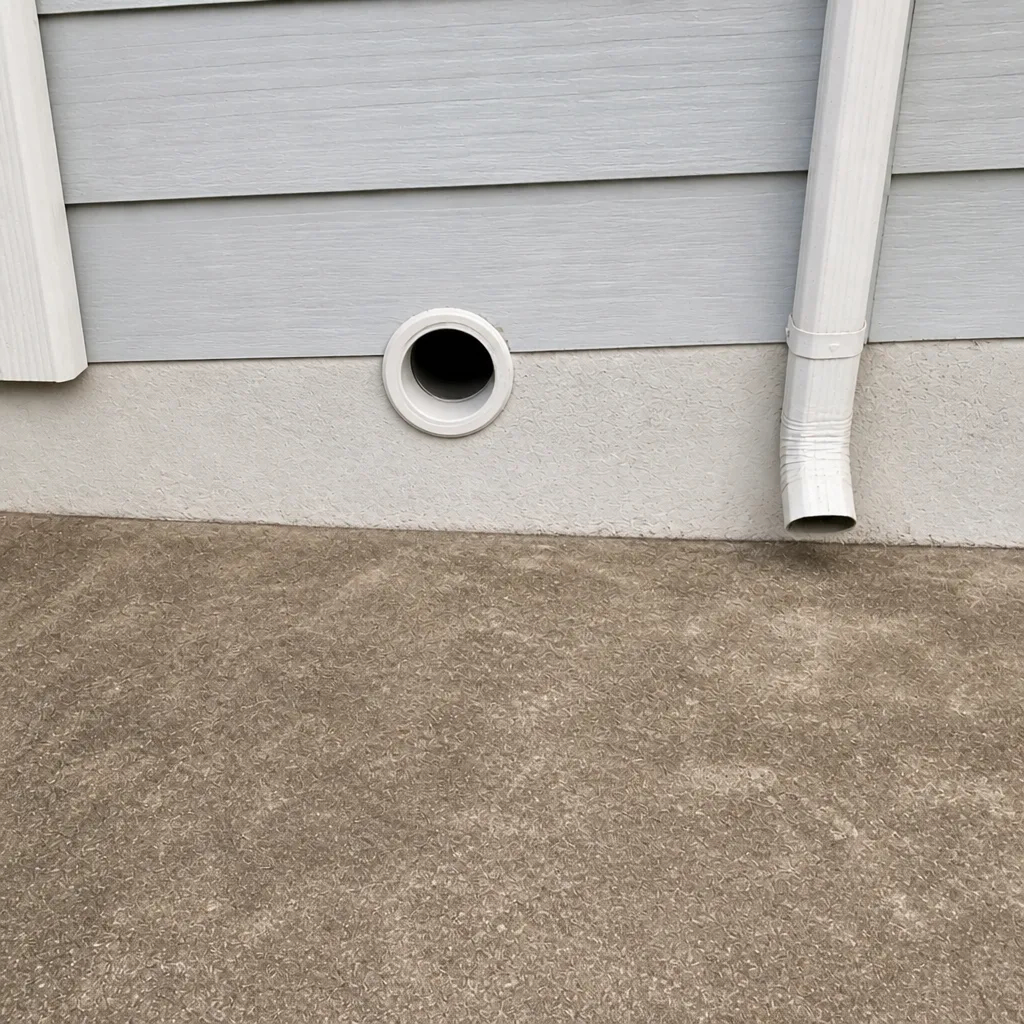 After