
Guardsman Air Duct Cleaning in Murray: A Homeowner’s Guide
Guardsman-brand duct products are sold at home improvement stores as a consumer solution, and homeowners in Murray ask us about them constantly. Here’s the thing that matters up front: Guardsman’s own product documentation doesn’t claim to replicate mechanical source removal. That distinction is enormous if what’s sitting in your ducts is active contamination rather than routine household dust. This guide explains what these products actually do, where they fit, and the warning signs that tell you a can of spray isn’t the answer. If you’d rather not sort it out alone, call (855) 658-3962.
What Do Guardsman Duct Cleaning Products Actually Do?
Guardsman products for ductwork are formulated for surface treatment and odor control, not debris removal. They’re applied as a mist or fog into the system, where they coat surfaces and address the smells and light surface soils they contact. Knowing that mechanism is the whole ballgame.
What they actually do:
- Coat surfaces with a residual treatment that helps suppress musty or stale odors coming off duct walls.
- Address light surface soils on accessible interior surfaces where the mist reaches.
- Neutralize odor molecules in the airstream rather than remove the material producing them.
What they don’t do:
- They don’t loosen or lift settled debris. Dust, hair, pet dander and construction grit that has bonded to duct walls needs mechanical agitation: brushes, whips and high-velocity negative air. A mist doesn’t touch that.
- They don’t extract anything. There’s no vacuum connection, no filtration, no containment. Whatever was in the duct is still in the duct when the can is empty.
- They don’t reach the whole system. A fog travels where the airflow takes it. It won’t reliably coat branch runs, plenum interiors or the inside of your air handler.
The professional version of this category works because it sits on top of source removal. In our Murray work, Abatement Technologies and Guardsman-brand products go into the toolkit as the finishing step of a full-system protocol, after the debris is out and the surfaces are genuinely clean. Spraying first and cleaning later is the wrong order.
Deodorizing vs. Sanitizing vs. Mechanical Removal: What’s the Difference?
These three things get lumped together in marketing and they shouldn’t be. Deodorizing hides a smell. Sanitizing reduces microbes on a surface. Mechanical removal takes the material out of the system entirely. Only one of those is cleaning in any meaningful sense.
Think of it this way. If a sponge in your kitchen smells, you can spray it with deodorizer and the smell fades for a while. You can spray it with a sanitizer and the surface microbes drop. But the food residue feeding them is still in there, and the smell comes back. Ductwork works the same way. The dust mat on the inside of a return run is food and habitat for whatever’s growing downstream of it. Mist the top of that mat and you’ve changed the smell, not the situation.
The sequence that actually works:
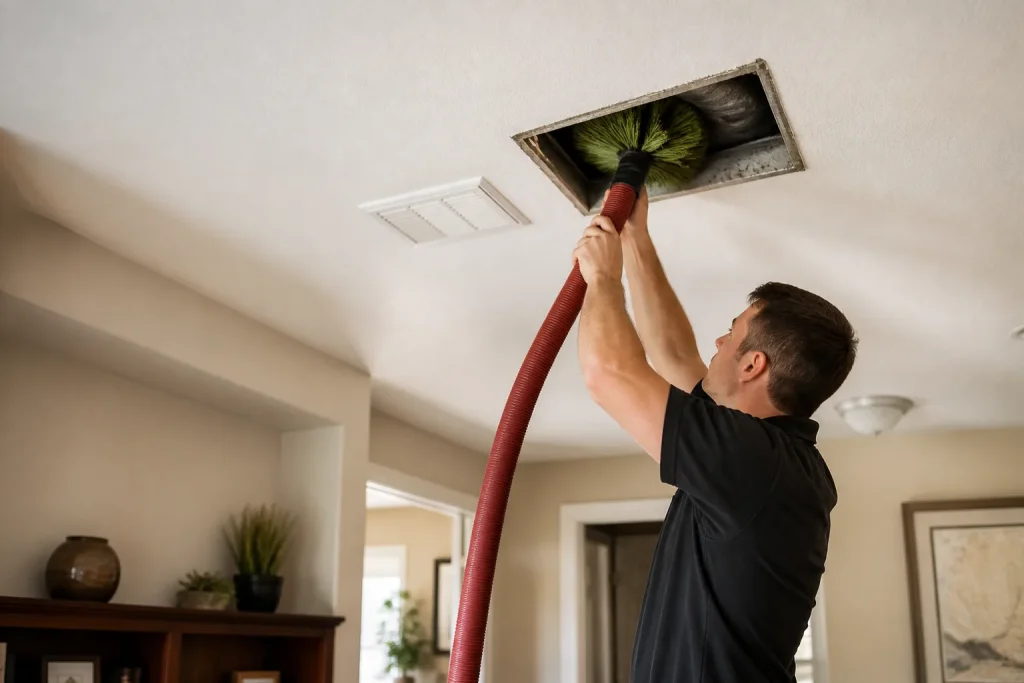
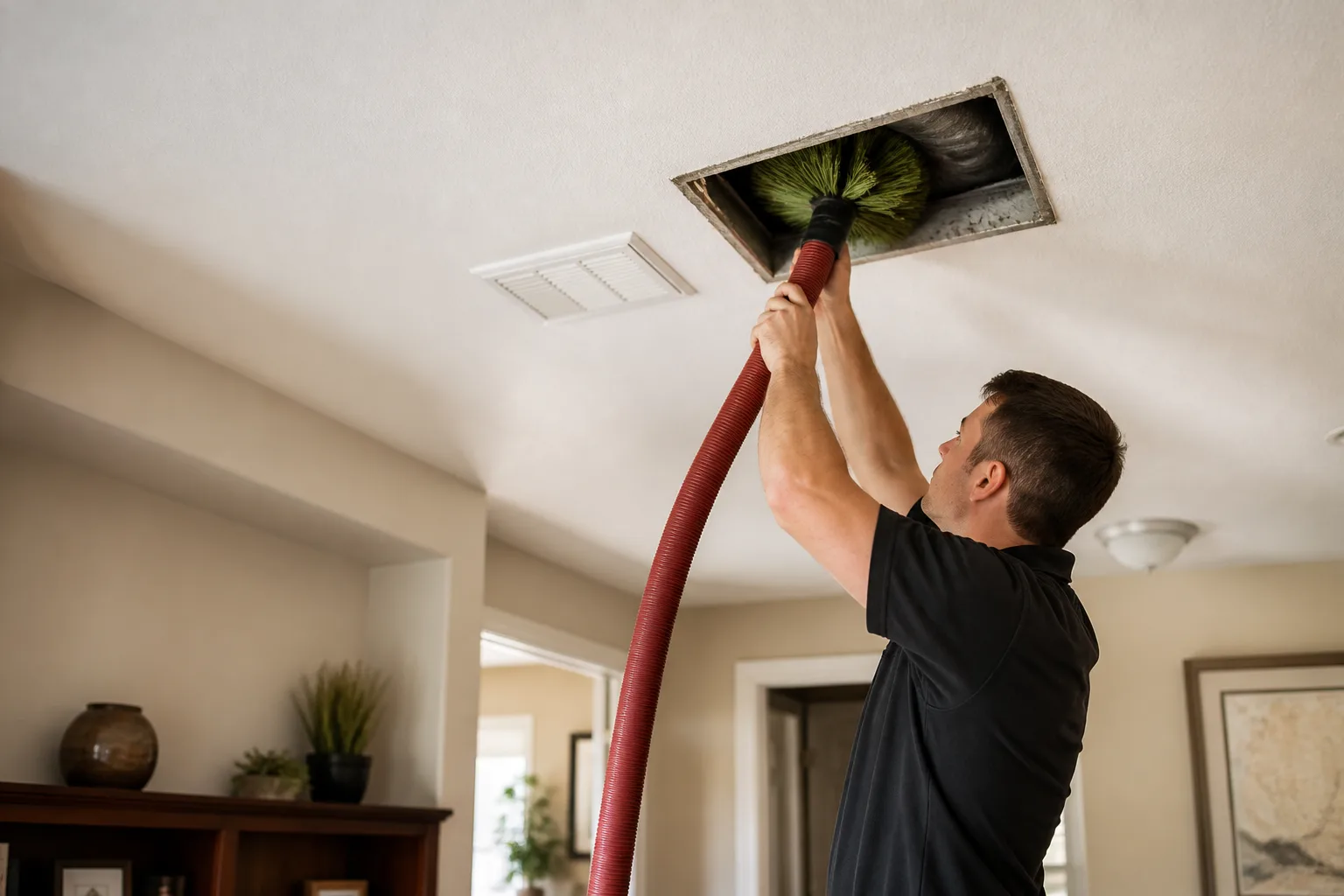
- Contain and extract. Negative air pressure keeps debris from migrating into living space while brushes and air whips agitate the duct walls.
- Clean the mechanical components. The blower, coils and cabinet interior are part of the air path. Rotobrush and Nikro equipment is built for exactly this kind of source work, which is why we carry it into every Murray job rather than a shop vacuum and a hose.
- Sanitize, if warranted. Once surfaces are clean, a sanitizing application actually contacts what it’s meant to treat.
- Seal and repair. Leaky joints at boots and plenums pull attic or crawlspace air straight into the system.
Notice where the consumer spray falls in that list: nowhere, or at best as a light maintenance step after step four. That isn’t a knock on the product. It’s a knock on using it backward.
Where Do Guardsman-Type Products Add Real Value?
There’s a legitimate place for consumer-grade duct treatments, and it’s narrower than the shelf display suggests. It’s after professional cleaning, as a between-service touch-up, and for odor control in systems that are already clean.
Where they hold up:
- Post-cleaning maintenance. A newly cleaned system with fresh filtration benefits from occasional surface treatment to keep that just-cleaned smell from returning between service intervals.
- Light odor control. A closed-up Murray home in a hot dry stretch can pick up a stale edge, and a light fog treatment can settle it without masking a real problem, as long as the ducts are genuinely clean to start with.
- Targeted spot treatment. A single smelly return grille from a pet bed or a spill is a small problem with a small solution.
Where they don’t:
If you don’t know the condition of the inside of your ducts, you can’t know whether a consumer treatment is maintenance or a cover-up. That’s the honest limitation. Paired with proper filtration, though, these products earn their shelf space. We install and service Honeywell and Aprilaire air quality components for the same reason: filtration and humidity control do more for air quality day to day than any spray applied once. Clean the system, filter what comes in, treat lightly between cleanings. That’s the chain.
Red Flags That Mean You Need More Than a Spray Can
Some conditions tell you a consumer treatment isn’t going to cut it. If you see any of the following, the right next step is a professional assessment, not another bottle.
- Visible mold on duct interiors, plenums, grilles or the air handler cabinet. A mist does not remove mold growth or the damp condition feeding it.
- Pest evidence. Droppings, nesting material or dead insects in the ducts. That material has to be extracted, and the entry point found and sealed.
- Post-renovation debris. Drywall dust, sawdust and construction grit that pulled into the returns during a remodel. Drywall dust is fine, abrasive and it coats everything downstream including your blower and coil.
- High dust return rate. If surfaces are dusty again two weeks after you wipe them, the house is recycling debris and filtration probably isn’t catching it.
- Uneven airflow or rising energy bills. Restricted or leaking ductwork limits what reaches each room. That’s a duct integrity problem, not a deodorizing problem.
- Musty smell that keeps returning after each treatment. The source is still there.
These are exactly the conditions our technicians look for during a duct assessment in Murray, and they’re the ones that justify source removal with professional-grade equipment rather than another retail bottle.
How to Use Consumer Products Without Masking a Real Problem
You can use consumer duct treatments sensibly. The trick is treating them as a finishing coat, not a fix. Here’s how we suggest Murray homeowners think about it: get a professional baseline first, use the products after, and recheck before you treat again.
- Get a baseline assessment. Before any spray touches the system, know what’s in it. A camera inspection and airflow check tells you whether you have maintenance-level dust or something bigger.
- Fix the source before you treat. If the assessment turns up mold, pest evidence, construction debris or a leaking plenum, address those first. Treatments come after.
- Keep your filtration honest. A high-quality filter changed on schedule removes far more from the airstream than an occasional fog. Honeywell and Aprilaire filter systems make the maintenance simple.
- Treat lightly and intermittently. Follow the product’s own directions and don’t layer applications hoping the smell goes away. If you have to re-apply within a week, that’s a signal, not a routine.
- Recheck before the next treatment. Treat, then reassess. Treating on top of an unseen problem just prolongs the diagnosis.
That last point matters most. The products are not the enemy; using them in place of diagnosis is. A treatment applied to a genuinely clean system is maintenance. Applied to an unknown system, it’s a guess with a pleasant smell.
When to Call a Pro in Murray
If you can’t see inside the ducts, you’re guessing. A professional assessment answers the question definitively, and it also catches the issues consumer products can’t touch: damaged ductwork, failing joints, a fouled blower, mold growth in the plenum, or an HVAC cabinet pulling unfiltered air.
Duct Repair & Sealing is a good example. If your system is leaking at every boot, no amount of surface treatment will improve what you breathe; the fix is repairing and sealing those leaks. That’s a job a spray can can’t do, and it’s a service category we handle directly rather than just cleaning what the leak left behind. Cleaning, HVAC cleaning, dryer vent service and air quality work all sit under the same protocol in our Murray work, which means one assessment can point you to the actual problem.
If your ducts are overdue for a real cleaning, start with our air duct cleaning overview, then read how we handle HVAC cleaning and dryer vent cleaning so you know what a full-system visit covers.
The Bottom Line
Guardsman-type duct products have a real, narrow job: odor control and light surface maintenance on a system that’s already clean. They don’t replicate mechanical source removal, and the product documentation doesn’t claim they do. Treat them as the finishing coat, not the fix. Get a professional baseline in Murray, fix what the assessment finds, keep your filter honest, and use the spray sparingly between service intervals. If the smell keeps coming back, that’s your answer that the problem goes deeper than a surface treatment.
If you’re in Murray and need help, Murray Air Duct Cleaning Pros offers free estimates. Call (855) 658-3962 for a no-pressure assessment of what’s actually inside your ducts. We answer 24/7, and we dispatch Sunday through Friday, 7am to 7pm.
Frequently Asked Questions
No, not in the cleaning sense. They treat surfaces and control odor, but they don’t lift, extract or remove settled debris. Mechanical source removal with professional-grade equipment like Rotobrush or Nikro is what removes dust, dander and construction grit from duct walls.
You can, but you won’t get the result you’re hoping for if there’s real contamination in the system. A surface mist reaches what the airflow carries it to, not the whole system, and it doesn’t extract anything. If you don’t know the condition of the inside of your ducts, get an assessment first. Call (855) 658-3962 for a free estimate.
Visible mold, pest evidence, post-renovation debris, a dust return rate that’s higher than normal, or a musty smell that keeps coming back after treatment. Those point to a source-control problem that a spray can’t solve. Get a pro to diagnose before you treat again.
Keep the ducts genuinely clean first, follow the product’s directions, and recheck before you reapply. If you’re re-treating within days, that’s a sign something needs diagnosis, not another application. And keep your filtration system current: Honeywell and Aprilaire systems do more day-to-day than any spray. Call (855) 658-3962 to set up a free assessment and get a clear plan.
Written by the team at Murray Air Duct Cleaning Pros.
Need Air Duct Cleaning Help?
Call Murray Air Duct Cleaning Pros - the local pro we connect you with is licensed and insured, here with fast help in Murray.
(855) 658-3962